
In the quiet suburban town of League City, TX, addiction can strike anyone, regardless of age, background, or socioeconomic status. I know this all too well; my younger brother struggled with opioid addiction for years, and it was only after he found the right treatment program that he was able to get back on his feet.
The journey to recovery was long and arduous, but with the right support system and treatment plan, he was able to overcome his addiction and live a happy, healthy life. If you or a loved one is struggling with addiction, it’s essential to choose the right treatment program to ensure a successful recovery.
Understand Addiction: A Complex Issue
According to the National Institute on Drug Abuse (NIDA), addiction is a chronic disease characterized by compulsive seeking and use of substances despite negative consequences. Understanding addiction is crucial to finding the right treatment program, which is why we’ll delve into the different types of addiction, the signs and symptoms, and the factors that contribute to addiction.
Symptoms of Addiction: Identifying the Warning Signs
My friend’s sister struggled with addiction for years before finally seeking help. She was exhibiting common signs and symptoms of addiction, including changes in behavior, mood swings, and financial problems. If you or a loved one is struggling with addiction, it’s essential to seek help immediately and find a treatment program that addresses specific addiction needs.
You might also want to check out our guide on detoxing your pancreas naturally and safely for more details on maintaining overall health during recovery.
Types of Addiction: A Comprehensive Overview
There are several types of addiction, including substance use disorders (SUDs) and behavioral addictions. SUDs include addiction to substances such as opioids, cocaine, marijuana, and prescription medications, while behavioral addictions include addiction to activities such as gambling, sex, and internet use. Understanding the different types of addiction is essential to finding the right treatment program, which is tailored to address specific addiction needs.
Factors Contributing to Addiction: Understanding the Root Cause
Addiction is often linked to underlying factors such as mental health conditions, trauma, and genetics. Understanding the root cause of addiction is essential to finding the right treatment program, which addresses specific addiction needs. In this section, we’ll explore the different factors that contribute to addiction and how they impact treatment outcomes.
As addictionresource.net explains, there are many underlying factors that contribute to addiction, and understanding these factors is crucial to finding the right treatment program.
National Certification Board for Addiction Professionals: A Standard of Excellence
When searching for an addiction treatment program, it’s essential to look for programs that are accredited by reputable organizations such as the National Certification Board for Addiction Professionals (NCBAP). The NCBAP is a professional organization that sets standards for addiction professionals, ensuring that they have the necessary education, training, and experience to provide high-quality care.
American Society of Addiction Medicine: A Gold Standard in Addiction Treatment
The American Society of Addiction Medicine (ASAM) is a professional organization that sets standards for addiction treatment. ASAM-accredited programs meet the highest standards of care, ensuring that patients receive comprehensive and evidence-based treatment. When searching for an addiction treatment program in League City, TX, look for ASAM-accredited programs that provide high-quality care.
Choosing the Right Treatment Program: Factors to Consider
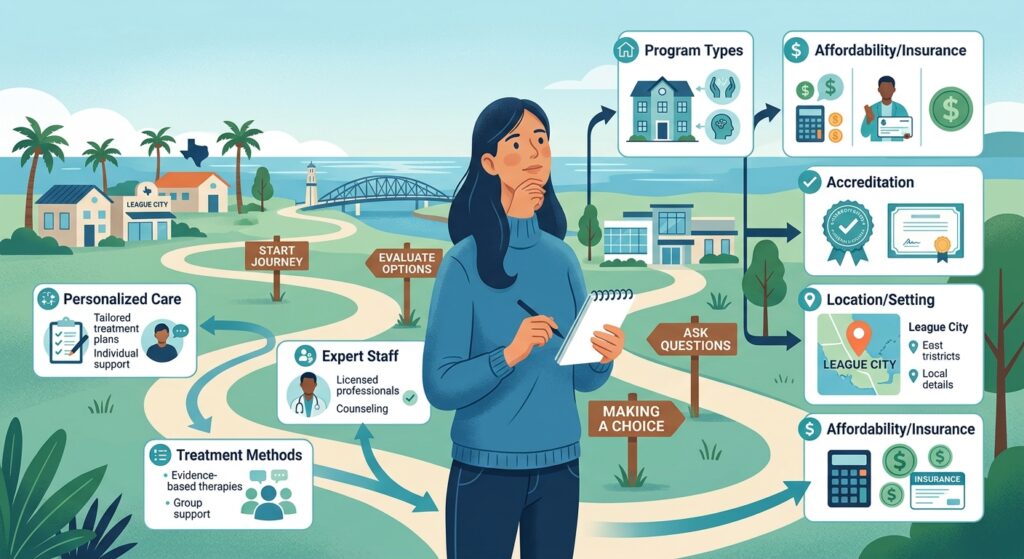
Choosing the right treatment program can be a daunting task, especially for those who are struggling with addiction firsthand. In this section, we’ll explore the factors to consider when choosing a treatment program, including location, type of treatment, length of stay, and cost.
Types of Treatment Programs: A Comprehensive Overview
There are several types of treatment programs, including inpatient, outpatient, intensive outpatient, and partial hospitalization. Each type of program has its own benefits and drawbacks, which is why it’s essential to choose a program that meets specific addiction needs.
Length of Stay: How Long is Too Long?
Length of stay is an essential factor to consider when choosing a treatment program. While some programs may offer short-term treatment, others may require longer stays. In this section, we’ll explore the importance of length of stay and how it impacts treatment outcomes.
Cost of Treatment: What to Expect
The cost of treatment is an essential factor to consider when choosing a treatment program. While some programs may be covered by insurance, others may require out-of-pocket payments. In this section, we’ll explore the costs associated with treatment and how to navigate the insurance system.
Comparison of Treatment Programs in League City, TX
In this section, we’ll provide a comparison of treatment programs in League City, TX, including inpatient, outpatient, and intensive outpatient programs. We’ll also provide a data table that highlights the benefits and drawbacks of each program.
| Program Type | Benefits | Drawbacks | Length of Stay | Cost |
|---|---|---|---|---|
| Inpatient | 24/7 care, structured environment | High cost, limited freedom | 30-60 days | $20,000 – $50,000 |
| Outpatient | Flexible scheduling, lower cost | Limited structure, may lead to relapse | 6-12 weeks | $5,000 – $15,000 |
| Intensive Outpatient | Structured environment, flexible scheduling | High cost, may require insurance | 6-12 weeks | $10,000 – $30,000 |
Tips for Choosing the Right Treatment Program: A Checklist
Choosing the right treatment program can be a daunting task, especially for those who are struggling with addiction firsthand. In this section, we’ll provide a checklist of tips to consider when choosing a treatment program, including:
- Researching accredited programs
- Considering the type of treatment
- Evaluating the length of stay
- Assessing the cost of treatment
- Seeking recommendations from healthcare professionals
Final Thoughts
Choosing the right addiction treatment program is a crucial step in achieving successful recovery. By understanding addiction, choosing the right type of treatment, and evaluating the length of stay and cost, you can make an informed decision that sets you or your loved one up for success. Remember to research accredited programs, consider the type of treatment, and seek recommendations from healthcare professionals.
Frequently Asked Questions
Q: What is the difference between inpatient and outpatient treatment?
Inpatient treatment provides 24/7 care in a structured environment, while outpatient treatment offers flexible scheduling and lower cost.
Q: How do I know if I need inpatient or outpatient treatment?
If you require 24/7 care and a structured environment, inpatient treatment may be the best option. If you prefer flexible scheduling and lower cost, outpatient treatment may be more suitable.
Q: What is the cost of treatment, and how do I pay for it?
The cost of treatment varies depending on the program type and length of stay. You may need to pay out-of-pocket or use insurance to cover treatment costs.
Q: How long does treatment typically last?
Treatment length varies depending on the program type and individual needs. Inpatient treatment may last 30-60 days, while outpatient treatment may last 6-12 weeks.
Q: What is the role of the National Certification Board for Addiction Professionals?
The National Certification Board for Addiction Professionals (NCBAP) sets standards for addiction professionals, ensuring they have the necessary education, training, and experience to provide high-quality care.
Q: What is the American Society of Addiction Medicine, and how does it impact treatment?
The American Society of Addiction Medicine (ASAM) is a professional organization that sets standards for addiction treatment. ASAM-accredited programs meet the highest standards of care, ensuring patients receive comprehensive and evidence-based treatment.
