

You wake up and the first thing you feel is pain. Your back is stiff and sore. It hurts to sit up or stand. You wonder why this keeps happening. Is it your bed? Your pillow? Or something else?
Morning back pain is very common. Many people in League City, TX feel this way too. The good news is that you can fix it. Small changes can make a big difference. You don’t have to live with this pain every day.
This guide will help you understand why your back hurts when you wake up. You’ll learn about your mattress, sleep positions, and daily habits. We’ll also share easy stretches and tips to help you feel better. Let’s find out what’s causing your pain and how to stop it.
What Causes Morning Back Pain?
Back pain in the morning doesn’t just appear. There’s always a reason. Sometimes it’s one big thing. Other times, it’s a mix of small things. The first step is to find out what’s causing your pain. Here are the most common reasons people wake up with a sore back.
Your mattress plays a big role. A bad mattress can make your back hurt even if you sleep well. Your sleep position matters too. Some positions put pressure on your spine. Others keep it straight and pain-free. Daily habits like sitting too much can also cause pain.
Stress and tension can make your back hurt too. When you’re stressed, your muscles tighten up. This can lead to pain when you wake up. Even your pillow can be a problem. A pillow that’s too high or too flat can strain your neck and back.
If you’re not sure what’s causing your pain, don’t worry. We’ll go through each cause one by one. You’ll learn how to spot the problem and fix it. Small changes can make a big difference in how you feel each morning.
How Your Mattress Affects Your Back
Your mattress is one of the biggest reasons for morning back pain. A good mattress supports your spine. A bad one can make your back hurt. How do you know if your mattress is the problem? Let’s find out.
Mattresses don’t last forever. Most need to be replaced every 7 to 10 years. If yours is older, it might be sagging or lumpy. This can cause your spine to bend in unnatural ways. When your spine isn’t straight, it can lead to pain. If you wake up with pain but feel better after moving around, your mattress might be to blame.
The firmness of your mattress matters too. Some people need a soft mattress. Others need a firm one. The right firmness depends on how you sleep. Side sleepers often need a softer mattress. This helps cushion their hips and shoulders. Back or stomach sleepers usually need a firmer mattress. This keeps their spine straight.
Here’s a table to help you choose the right mattress firmness:
| Sleep Position | Best Mattress Firmness | Why It Helps |
|---|---|---|
| Side Sleeper | Soft to Medium | Cushions hips and shoulders |
| Back Sleeper | Medium to Firm | Keeps spine straight |
| Stomach Sleeper | Firm | Prevents spine from bending |
If your mattress is too soft or too hard, it can cause pain. You might also toss and turn a lot at night. This can make your back hurt more. If you sleep better in other beds, like at a hotel, your mattress might be the problem. Try sleeping on a different bed for a few nights. If your pain goes away, it’s time for a new mattress.
When shopping for a new mattress, take your time. Lie down on different types to see what feels best. Don’t rush the decision. A good mattress is an investment in your health. It can help you wake up pain-free every morning.
How to Pick the Right Pillow for Your Back
Your pillow is just as important as your mattress. A bad pillow can cause neck and back pain. The right pillow supports your head and keeps your spine straight. Here’s how to choose the best one for you.
Pillows come in different shapes and sizes. Some are soft. Others are firm. The best pillow depends on how you sleep. Side sleepers need a thicker pillow. This fills the gap between their head and shoulder. Back sleepers need a medium pillow. This keeps their head from tilting too far forward. Stomach sleepers need a thin pillow. This prevents their neck from bending too much.
Memory foam pillows are a good choice for many people. They mold to your head and neck. This gives you support where you need it most. Latex pillows are another good option. They’re firm and bouncy. This helps keep your spine aligned. Feather pillows are soft but don’t offer much support. They can flatten over time and cause pain.
Here are some tips to help you pick the right pillow:
- Try different pillows before you buy one. Lie down and see how it feels.
- Replace your pillow every 1 to 2 years. Pillows lose their shape over time.
- Use a pillow that matches your sleep position. Side sleepers need thicker pillows.
- Look for a pillow that supports your neck. It should keep your spine straight.
- If you wake up with neck pain, your pillow might be too high or too flat.
I once tried a memory foam pillow and noticed a big difference. My neck felt better, and I slept more soundly. If your pillow is old or lumpy, it might be time for a new one. A good pillow can help you wake up without pain.
If you’re not sure which pillow to choose, ask for help. Many stores let you try pillows before you buy them. Take your time and pick one that feels right. Your back will thank you.
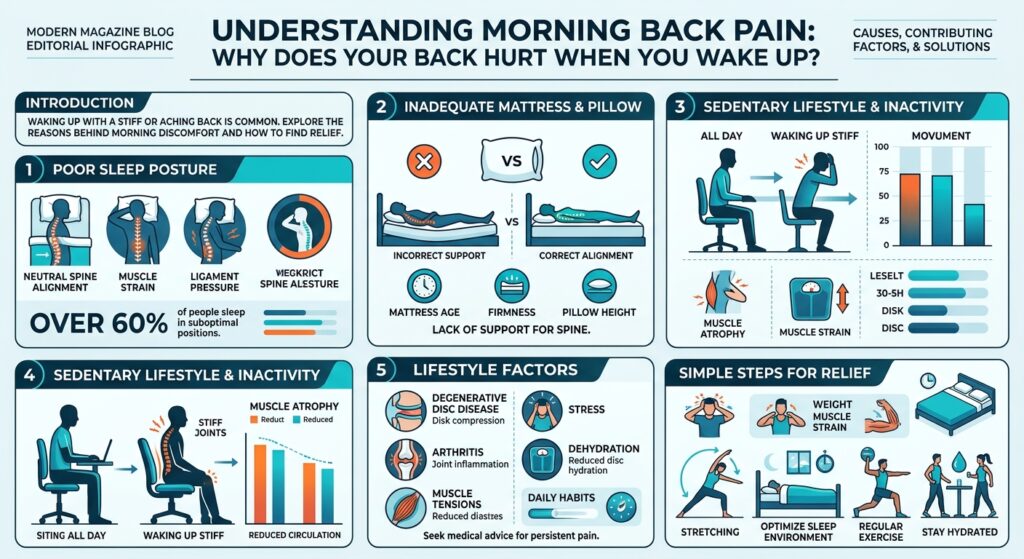
The Role of Sleep Positions in Back Pain
How you sleep can make your back hurt. Some positions put pressure on your spine. Others help keep it straight. If you wake up with back pain, your sleep position might be the cause. Let’s look at the best and worst positions for your back.
The best sleep position is on your back. This keeps your spine in a natural line. Put a pillow under your knees to help even more. This takes pressure off your lower back. Side sleeping is also good. Put a pillow between your knees. This stops your top leg from pulling your spine out of line.
The worst position is on your stomach. This flattens the natural curve of your spine. It also forces you to turn your head to one side. This can strain your neck and back. If you must sleep on your stomach, put a thin pillow under your hips. This helps keep your spine straight. Sleeping in a twisted position is also bad. This can strain your back muscles and cause pain.
Changing your sleep position can be hard. Your body gets used to sleeping a certain way. But small changes can help. Try using pillows to support your body. For example, put a pillow under your knees if you sleep on your back. This can help keep your spine aligned. If you sleep on your side, put a pillow between your knees. This stops your top leg from pulling your spine out of line.
If you’re not sure which position is best, try them all. See which one feels the most comfortable. You might need to try a few different positions before you find the right one. The key is to keep your spine straight. This can help reduce morning back pain.
How Spinal Alignment Affects Morning Pain
Your spine is like a stack of blocks. When it’s straight, it works well. When it’s crooked, it can cause pain. Spinal alignment is how your spine lines up. Poor alignment can lead to morning back pain. Here’s what you need to know.
Your spine has three natural curves. There’s a small curve at your neck. Another at your middle back. And one at your lower back. When these curves are in the right place, your spine is aligned. This helps your body move and feel its best. When your spine is out of alignment, it can cause problems. Your muscles have to work harder to keep you upright. This can lead to stiffness and pain.
Poor alignment can happen for many reasons. It might be from bad posture. Sitting too much can cause your spine to curve. A bad mattress or pillow can also throw your spine out of line. Even your shoes can affect your alignment. High heels or shoes with no support can change the way you walk. This can put pressure on your spine and cause pain.
You can check your alignment at home. Stand with your back against a wall. Your heels, butt, shoulders, and head should touch the wall. Look in a mirror. Your ears should line up with your shoulders. Your shoulders should line up with your hips. If they don’t, your alignment might be off. Lie on the floor. Your lower back should have a small gap between it and the floor. If the gap is too big or too small, your alignment might be off.
If you think your alignment is off, talk to a doctor or chiropractor. They can help you fix it. Simple exercises can also help. Stretching and strengthening your back muscles can improve your alignment. This can help reduce morning back pain.
Why Stretching Helps Your Back in the Morning
Stretching is one of the best ways to stop morning back pain. It helps loosen tight muscles and improve flexibility. If you don’t stretch, your muscles can get stiff. This can make your back hurt when you wake up. Here’s how stretching can help.
Stretching does a few important things for your back. It loosens tight muscles. Tight muscles can pull your spine out of alignment. Stretching helps them relax. It also improves blood flow. This helps your muscles heal and recover. Stretching increases flexibility too. This makes it easier to move without pain. Stretching in the morning can help wake up your muscles. Stretching at night can help them relax before bed.
Here are some easy stretches to try. The knee-to-chest stretch is great for your lower back. Lie on your back and pull one knee to your chest. Hold for 20 seconds. Switch legs. The cat-cow stretch is good for your whole back. Get on your hands and knees. Arch your back up like a cat. Then, dip it down like a cow. Repeat 10 times. Child’s pose is another good stretch. Kneel on the floor and sit back on your heels. Stretch your arms out in front of you. Hold for 20 seconds.
Timing matters when it comes to stretching. Stretch right after you wake up. This helps loosen stiff muscles. Stretch before you go to sleep too. This helps your muscles relax. If you sit a lot during the day, stretch every hour. This helps prevent stiffness. Stretching is simple, but it can make a big difference. Try to stretch every day to keep your back healthy.
According to the Sleep Foundation, stretching can help reduce morning back pain. It’s a simple way to keep your back strong and flexible. If you’re not sure how to stretch, ask a doctor or physical therapist. They can show you the best stretches for your back.
How Your Daily Habits Affect Morning Back Pain
What you do during the day can affect how your back feels in the morning. Some habits can make back pain worse. Others can help prevent it. Here’s how your daily habits play a role.
Sitting too much is bad for your back. Many people sit for long periods at work or at home. Sitting puts pressure on your spine. It can also weaken your back muscles. If you sit a lot, try to take breaks. Stand up and walk around every 30 minutes. This can help reduce morning back pain. You can also try a standing desk. This lets you work while standing up. It’s a great way to keep your back healthy.
Lifting heavy objects the wrong way can hurt your back. This can cause pain that lasts for days. To lift safely, bend your knees, not your back. Keep the object close to your body. Lift with your legs, not your back. If you lift heavy objects often, learn the right way to do it. This can help prevent back pain. If you’re not sure how to lift safely, ask for help. A physical therapist can show you the best way to lift.
Wearing the wrong shoes can also cause back pain. Shoes with no support can change the way you walk. This can put pressure on your spine. High heels are especially bad. They change your posture and can cause back pain. Wear shoes with good support. This can help keep your back healthy. If you’re not sure which shoes to wear, ask a shoe store employee. They can help you find the right pair.
Your diet can affect your back too. Eating too much junk food can cause inflammation. This can make back pain worse. Eating healthy foods can help reduce inflammation. Try to eat more fruits, vegetables, and lean proteins. Drink plenty of water too. This helps keep your muscles and joints healthy. If you’re not sure what to eat, talk to a nutritionist. They can help you create a healthy diet plan.
When to See a Chiropractor for Back Pain
Sometimes, back pain doesn’t go away on its own. If your pain is bad or lasts a long time, you might need help. A chiropractor can be a good option. Here’s what you need to know.
A chiropractor is a doctor who focuses on the spine. They use their hands to adjust your spine. This can help reduce pain and improve alignment. Chiropractors can also give advice on posture, stretching, and other ways to help your back. If your pain is severe or doesn’t go away, a chiropractor can help. They can figure out what’s causing your pain and how to fix it.
You should see a chiropractor if your pain is bad or gets worse. If you have numbness or tingling in your legs or arms, see a chiropractor. If your pain doesn’t go away after a few weeks, it’s time to get help. If you have trouble standing or walking, don’t wait. See a chiropractor right away. They can help you feel better and get back to your normal activities.
Your first visit to a chiropractor will include a few things. They’ll ask about your health history. They’ll want to know about your pain and other symptoms. They’ll do a physical exam. They’ll check your spine and how you move. They might take X-rays or other tests. This helps them see what’s going on inside your body. After the exam, they’ll create a treatment plan. This will tell you what’s wrong and how to fix it.
A study from BMJ Open found that sleep posture can affect spinal symptoms. If you wake up with back pain, your sleep position might be the cause. A chiropractor can help you figure out the best position for your back. They can also give you tips on how to sleep better.
How Stress and Tension Affect Your Back
Stress and tension can make your back hurt. When you’re stressed, your muscles tighten up. This can lead to pain when you wake up. If you’re always stressed, your back might hurt more often. Here’s how stress affects your back and what you can do about it.
When you’re stressed, your body releases hormones. These hormones make your muscles tense. This can cause pain in your back, neck, and shoulders. Stress can also make it hard to sleep. When you don’t sleep well, your back can hurt more. If you’re stressed, try to find ways to relax. This can help reduce your back pain.
There are many ways to manage stress. Exercise is a great way to reduce stress. It helps relax your muscles and improve your mood. Try walking, swimming, or yoga. Deep breathing can also help. Take slow, deep breaths and focus on relaxing your muscles. Meditation is another good option. It helps calm your mind and reduce stress. You can find guided meditations online or use an app.
Getting enough sleep is important too. When you don’t sleep well, your body doesn’t have time to recover. This can make your back hurt more. Try to go to bed at the same time every night. Create a relaxing bedtime routine. This can help you sleep better and reduce stress. If you’re not sure how to manage stress, talk to a doctor or therapist. They can help you find the best ways to relax.
According to Medical News Today, stress can make back pain worse. If you’re always stressed, your back might hurt more. Finding ways to relax can help reduce your pain. Try different methods to see what works best for you.
How to Prevent Morning Back Pain
Preventing morning back pain is easier than you think. Small changes can make a big difference. Here’s how to keep your back healthy and pain-free.
Start with your mattress and pillow. Make sure they support your spine. If they’re old or lumpy, replace them. Your sleep position matters too. Try to sleep on your back or side. Use pillows to support your body. This can help keep your spine aligned. Stretching is another great way to prevent pain. Stretch in the morning and before bed. This helps loosen tight muscles and improve flexibility.
Your daily habits can also affect your back. Try to sit less and move more. Take breaks every 30 minutes to stand and walk. Lift heavy objects the right way. Bend your knees and keep the object close to your body. Wear shoes with good support. This can help keep your spine aligned. Eating healthy foods can also help. Try to eat more fruits, vegetables, and lean proteins. Drink plenty of water too.
Managing stress is important too. Stress can make your back hurt more. Find ways to relax. Exercise, deep breathing, and meditation can help. Getting enough sleep is also key. Try to go to bed at the same time every night. Create a relaxing bedtime routine. This can help you sleep better and reduce stress. If your pain doesn’t go away, see a chiropractor. They can help you figure out what’s wrong and how to fix it.
Research by PMC shows that certain sleep positions can make back pain worse. If you wake up with pain, try changing your position. Use pillows to support your body. This can help keep your spine aligned and reduce pain.
Final Thoughts
Morning back pain is a common problem. But it doesn’t have to be a part of your life. Small changes can make a big difference. Start with your mattress and pillow. Make sure they support your spine. Try to sleep in a good position. Use pillows to keep your spine aligned. Stretch every day to loosen tight muscles.
Your daily habits matter too. Sit less and move more. Lift heavy objects the right way. Wear shoes with good support. Eat healthy foods and drink plenty of water. Manage stress with exercise, deep breathing, or meditation. If your pain doesn’t go away, see a chiropractor. They can help you figure out what’s wrong and how to fix it.
Remember, your back is important. It helps you move, stand, and sit. Taking care of it can help you feel your best. Try these tips and see what works for you. You don’t have to live with morning back pain. Small changes can help you wake up pain-free every day.
If you’re in League City, TX, and need help with your back, there are many options. You can find a chiropractor or physical therapist near you. They can help you feel better and get back to your normal activities. Don’t wait to take care of your back. Start today and see the difference.
Frequently Asked Questions
Why does my back hurt more in the morning than at night?
Your back might hurt more in the morning because your muscles stiffen overnight. When you sleep, your body doesn’t move much. This can cause your muscles to tighten up. Stretching in the morning can help loosen them and reduce pain.
Can a bad pillow cause back pain?
Yes, a bad pillow can cause back pain. If your pillow is too high or too flat, it can strain your neck and back. The right pillow supports your head and keeps your spine straight. Try different pillows to see what feels best.
How long should I keep my mattress before replacing it?
Most mattresses last about 7 to 10 years. If yours is older, it might be sagging or lumpy. This can cause your spine to bend in unnatural ways. If you wake up with pain, it might be time for a new mattress.
What’s the best sleep position for back pain?
The best sleep position for back pain is on your back. This keeps your spine in a natural line. Put a pillow under your knees to help even more. Side sleeping is also good. Put a pillow between your knees to keep your spine aligned.
When should I see a doctor for my back pain?
You should see a doctor if your pain is severe or doesn’t go away. If you have numbness or tingling in your legs or arms, see a doctor. If your pain makes it hard to stand or walk, don’t wait. Get help right away.
