

You wake up ready for a new day. But as soon as you sit up, your back screams. The pain is sharp or dull. It makes you groan instead of smile. You wonder why this happens every morning. Is it your bed? Your pillow? Or something else?
Morning back pain is very common. Many people feel it when they first get up. The good news is that it’s usually not serious. Most of the time, small changes can make a big difference. You don’t have to live with this pain forever. This guide will help you understand why your back hurts in the morning. It will also show you how to fix it.
Your back is made of bones, muscles, and joints. When these don’t work well together, pain can happen. Sleeping in the wrong position or on a bad mattress can cause this. Even your daily habits can play a role. The key is to find out what’s causing your pain. Once you know, you can make changes to feel better.
This article will cover everything you need to know. You’ll learn about the best sleep positions. You’ll find out how to pick the right mattress and pillow. There are also simple stretches to try before bed and in the morning. If your pain doesn’t go away, you’ll know when to see a doctor. Let’s start by looking at the most common causes of morning back pain.
What Causes Back Pain When You Wake Up?
Back pain in the morning can feel confusing. You went to bed feeling fine. Now, you wake up with a sore back. What changed overnight? The answer is often simple. Your body was in one position for hours. If that position wasn’t good for your back, pain can happen.
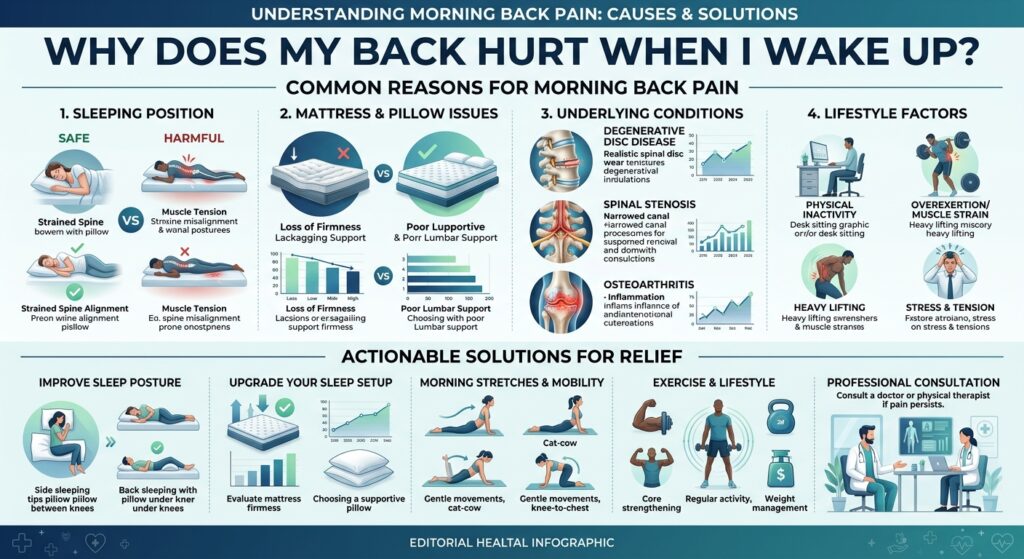
Your spine is like a stack of blocks. It needs to stay straight to work well. If it bends too much, the muscles and joints get stressed. This can lead to pain when you wake up. The most common causes are your mattress, sleep position, or daily habits. Let’s look at each one.
Sometimes, the problem is your mattress. If it’s too soft or too old, it won’t support your back. This can make your spine bend in ways it shouldn’t. Other times, the issue is how you sleep. Sleeping on your stomach can twist your spine. This puts pressure on your back and neck.
Your daily habits matter too. Sitting too much or not moving enough can make your muscles weak. Weak muscles can’t support your spine well. This can lead to pain, especially in the morning. Stress can also make your muscles tight. Tight muscles can pull on your spine and cause pain.
Morning back pain is usually not a sign of a big health problem. But if the pain is very bad or lasts a long time, it’s best to see a doctor. They can check if something else is going on. For most people, though, simple fixes can help. Let’s start with the most important one: your mattress.
How Your Mattress Affects Your Back
Your mattress is one of the biggest factors in morning back pain. If it’s not right for you, your back will feel it. A good mattress supports your spine. It keeps it straight while you sleep. If your mattress is too soft, your body sinks in too much. This can make your spine bend in unhealthy ways.
A mattress that’s too hard can also cause problems. It doesn’t give enough cushion for your hips and shoulders. This can put pressure on your back. The best mattress is one that’s firm but not too hard. It should support your spine while keeping you comfortable.
Most mattresses last about 7 to 10 years. After that, they start to sag or lose support. If your mattress is old, it might be time for a new one. Signs that your mattress is too old include lumps, sagging, or waking up with pain. If you notice these, it’s time to shop for a new mattress.
Choosing a new mattress can feel overwhelming. There are so many types to pick from. Memory foam, latex, and hybrid mattresses are popular choices. Each has its own pros and cons. Later in this article, we’ll compare them in a handy table. For now, remember that the best mattress is the one that keeps your spine straight.
If you’re not ready to buy a new mattress, there are temporary fixes. You can try putting a board under your mattress to make it firmer. Or, you can add a mattress topper for extra cushion. These won’t fix the problem forever, but they can help for now. The best long-term solution is to get a mattress that supports your back well.
Sleep Positions That Hurt Your Back
The way you sleep can make or break your back. Some positions put too much pressure on your spine. Others help keep it aligned. If you wake up with back pain, your sleep position might be the culprit. Let’s look at the best and worst positions for your back.
Sleeping on your back is usually the best for your spine. It keeps your body in a natural position. To make it even better, put a pillow under your knees. This takes pressure off your lower back. If you’re a back sleeper, you’re already ahead of the game.
Sleeping on your side is also a good choice. It’s especially helpful if you have lower back pain. To make it better, put a pillow between your knees. This keeps your hips aligned and reduces stress on your back. Just make sure your pillow is the right height for your neck.
The worst position for your back is sleeping on your stomach. This position twists your spine and puts pressure on your neck. It can also make your lower back arch too much. If you’re a stomach sleeper, try to train yourself to sleep on your side or back. It might take time, but your back will thank you.
If you’re not sure how you sleep, ask someone to check on you at night. Or, set up a camera to record yourself. You might be surprised by what you find. Once you know your sleep position, you can make changes to protect your back. Small adjustments can make a big difference in how you feel in the morning.
Changing your sleep position isn’t always easy. It can take time to get used to a new way of sleeping. Start by trying to fall asleep in the new position. If you wake up in your old position, don’t worry. Just try again the next night. Over time, your body will adjust. If you need help, there are pillows designed to keep you in the right position. We’ll talk more about those later.
Is Your Pillow Making Your Back Pain Worse?
Your pillow might seem like a small thing. But it can have a big impact on your back. A pillow that’s too high or too flat can mess up your spinal alignment. This can lead to neck and back pain. The right pillow supports your neck and keeps your spine straight.
If you sleep on your back, your pillow should be thin. It should support your neck without pushing your head too far forward. If you sleep on your side, you need a thicker pillow. This fills the gap between your head and the mattress. It keeps your neck in line with your spine.
Stomach sleepers need the thinnest pillow. In fact, you might not need a pillow at all. Sleeping on your stomach already puts your neck in an awkward position. A thick pillow can make it worse. If you can’t give up your pillow, try a very thin one. Or, put a pillow under your chest to reduce the strain on your neck.
Memory foam pillows are a good choice for many people. They mold to your head and neck. This gives you support where you need it most. Latex pillows are another option. They’re bouncy and cool, which some people prefer. The best pillow for you depends on your sleep position and personal preference.
If you wake up with neck or back pain, your pillow might be the problem. Try a different one to see if it helps. You can also try folding your pillow in half or using two pillows. This can give you more support. Just make sure your spine stays straight. A good pillow can make a big difference in how you feel in the morning.
Your pillow isn’t the only thing that affects your back. Your daily habits play a role too. Let’s look at how what you do during the day can affect how you feel at night.
How Your Daily Habits Affect Morning Back Pain
What you do during the day can affect how your back feels at night. Sitting too much is one of the biggest culprits. When you sit, your back muscles don’t work as hard. Over time, they can get weak. Weak muscles can’t support your spine well. This can lead to pain, especially in the morning.
If you have a desk job, try to stand up and move around often. Set a timer to remind yourself to take breaks. Even a short walk can help. Stretching at your desk can also make a difference. Simple stretches like reaching your arms overhead or rolling your shoulders can help keep your muscles loose.
Exercise is another important part of keeping your back healthy. You don’t need to run a marathon. Even a daily walk can help. Strengthening your core muscles can also make a big difference. Your core includes your stomach and lower back muscles. These muscles support your spine. Strong core muscles can help prevent back pain.
Lifting heavy things the wrong way can also hurt your back. Always bend your knees when you lift. Keep the object close to your body. Don’t twist while you lift. These simple rules can help protect your back. If you’re not sure how to lift something safely, ask for help.
Stress can also make your back pain worse. When you’re stressed, your muscles tense up. This can pull on your spine and cause pain. Finding ways to relax can help. Try deep breathing, meditation, or gentle yoga. Even a few minutes of relaxation can make a difference. Your back will thank you for it.
Your daily habits can have a big impact on your back. Small changes can make a big difference. Try to move more, sit less, and lift things safely. Find ways to relax and reduce stress. These simple steps can help you wake up without back pain. If you want to learn more about how your habits affect your health, you can read about why the American diet is dangerous.
Stretches to Do Before Bed for Less Morning Pain
Stretching before bed can help loosen tight muscles. This can prevent back pain in the morning. Simple stretches can make a big difference. You don’t need to do a full workout. Just a few minutes of gentle stretching can help.
One easy stretch is the knee-to-chest stretch. Lie on your back. Bring one knee up to your chest. Hold it with your hands. Keep your other leg straight. Hold for 20 seconds, then switch legs. This stretch helps loosen your lower back and hips.
Another good stretch is the cat-cow stretch. Get on your hands and knees. Arch your back up like a cat. Then, dip it down like a cow. Repeat this a few times. This stretch helps loosen your entire spine. It’s great for people who sit a lot during the day.
The child’s pose is another helpful stretch. Kneel on the floor. Sit back on your heels. Stretch your arms out in front of you. Rest your forehead on the floor. Hold for 20 seconds. This stretch helps relax your back and shoulders.
Stretching your hips can also help your back. Tight hips can pull on your lower back. One easy hip stretch is the butterfly stretch. Sit on the floor. Bring the soles of your feet together. Gently press your knees down with your elbows. Hold for 20 seconds. This stretch helps loosen your hips and lower back.
Try to do these stretches every night before bed. They can help loosen tight muscles and prevent morning back pain. If you wake up with pain, there are also stretches you can do in the morning. Let’s look at those next.
Morning Stretches to Ease Back Pain Fast
If you wake up with back pain, stretching can help. Gentle movements can loosen stiff muscles. They can also get your blood flowing. This can help reduce pain and stiffness. Here are some easy stretches to try in the morning.
The first stretch is the pelvic tilt. Lie on your back with your knees bent. Tighten your stomach muscles. Press your lower back into the floor. Hold for 5 seconds, then relax. Repeat 10 times. This stretch helps loosen your lower back.
Another good stretch is the seated forward bend. Sit on the edge of your bed. Stretch your legs out in front of you. Reach for your toes. Keep your back straight. Hold for 20 seconds. This stretch helps loosen your hamstrings and lower back.
The standing hamstring stretch is also helpful. Stand up straight. Put one foot on a low step or stool. Keep your leg straight. Lean forward slightly. Hold for 20 seconds, then switch legs. This stretch helps loosen your hamstrings and lower back.
If your upper back hurts, try the shoulder blade squeeze. Sit or stand up straight. Squeeze your shoulder blades together. Hold for 5 seconds, then relax. Repeat 10 times. This stretch helps loosen your upper back and shoulders.
These stretches can help ease morning back pain. Try to do them every morning. They only take a few minutes. But they can make a big difference in how you feel. If your pain doesn’t go away, you might need to see a professional. Let’s talk about when to see a chiropractor.
When to See a Chiropractor for Back Pain
Sometimes, back pain doesn’t go away with simple fixes. If your pain is bad or lasts a long time, you might need to see a chiropractor. Chiropractors are experts in spine health. They can help figure out what’s wrong and how to fix it.
You should see a chiropractor if your back pain lasts more than a few weeks. You should also see one if the pain is very bad. Other signs include numbness, tingling, or weakness in your legs. These could be signs of a more serious problem. A chiropractor can help find the cause and treat it.
A chiropractor will start by asking about your pain. They’ll want to know when it started and what makes it worse. They’ll also do a physical exam. This might include checking your spine and testing your range of motion. They might also take X-rays to get a better look at your spine.
Chiropractors use hands-on treatments to help with back pain. One common treatment is called an adjustment. This is when the chiropractor uses their hands to move your spine. This can help realign your spine and reduce pain. They might also use massage or stretching to help loosen tight muscles.
If you’re in League City, TX, there are many good chiropractors to choose from. Look for one with good reviews and experience. You can also ask your friends or family for recommendations. If you want to learn more about how chiropractic adjustments work, you can read about why chiropractic adjustments work.
Chiropractors can help with many types of back pain. But sometimes, back pain is a sign of a bigger health problem. Let’s look at some other conditions that can cause morning back pain.
Other Health Problems That Cause Morning Back Pain
Back pain in the morning isn’t always about your sleep or habits. Sometimes, it’s a sign of a bigger health problem. Conditions like arthritis, herniated discs, or even kidney problems can cause back pain. It’s important to know when to worry and when to see a doctor.
Arthritis is a common cause of back pain. It happens when the joints in your spine wear down. This can cause pain, stiffness, and swelling. Arthritis pain is often worse in the morning. It usually gets better as you move around. If you have arthritis, your doctor can help you manage the pain.
A herniated disc is another possible cause. Your spine is made of bones called vertebrae. Between each bone is a soft disc. These discs act as cushions. If a disc slips out of place, it can press on a nerve. This can cause pain, numbness, or weakness. A herniated disc can happen from an injury or just from wear and tear.
Kidney problems can also cause back pain. Your kidneys are located near your lower back. If they’re infected or have stones, they can cause pain. This pain is usually on one side of your back. It might also come with other symptoms like fever or pain when you pee. If you think your back pain might be from your kidneys, see a doctor right away.
Other health problems that can cause back pain include osteoporosis, scoliosis, and fibromyalgia. Osteoporosis is when your bones get weak. This can make them more likely to break. Scoliosis is when your spine curves to the side. Fibromyalgia is a condition that causes pain all over your body. If you have any of these conditions, talk to your doctor about how to manage your back pain.
If your back pain is very bad or lasts a long time, see a doctor. They can do tests to find out what’s causing it. These tests might include X-rays, MRIs, or blood tests. Once they know the cause, they can help you find the best treatment. Don’t ignore back pain that doesn’t go away. It’s better to be safe than sorry.
How to Choose the Best Mattress for Back Pain
A good mattress can make a huge difference in your back pain. But how do you know which one to pick? There are so many options—memory foam, latex, hybrid, and more. The best mattress for you depends on your sleep position and personal preference. Let’s look at the pros and cons of each type.
Memory foam mattresses are popular because they mold to your body. This gives you support where you need it most. They’re great for side sleepers because they cushion your hips and shoulders. The downside is that they can sleep hot. If you get warm at night, look for a memory foam mattress with cooling gel.
Latex mattresses are bouncy and cool. They’re made from natural or synthetic rubber. Latex is great for back sleepers because it supports your spine. It’s also durable and long-lasting. The downside is that latex mattresses can be expensive. If you’re on a budget, this might not be the best choice.
Hybrid mattresses combine foam and coils. This gives you the best of both worlds. The foam provides cushion, while the coils give you support. Hybrid mattresses are great for combo sleepers. These are people who switch positions during the night. The downside is that they can be heavy and expensive.
Innerspring mattresses are the most traditional type. They have coils inside that give you support. They’re usually firm and have good airflow. This makes them a good choice for stomach sleepers. The downside is that they can sag over time. If you choose an innerspring mattress, look for one with a strong coil system.
Here’s a table to help you compare the different types of mattresses:
| Mattress Type | Pros | Cons | Best For |
|---|---|---|---|
| Memory Foam | Soft, molds to body | Can sleep hot | Side sleepers |
| Latex | Bouncy, cool | Expensive | Back sleepers |
| Hybrid | Mix of foam and coils | Heavy | Combo sleepers |
| Innerspring | Firm, good airflow | Can sag | Stomach sleepers |
When you’re shopping for a mattress, try to test it out first. Lie on it for at least 10 minutes. See how it feels. Does it support your back? Is it comfortable? If you can’t test it in person, look for a mattress with a good return policy. This way, you can try it at home and return it if it doesn’t work for you.
If you’re in League City, TX, there are many places to buy a good mattress. Look for stores with good reviews and a wide selection. You can also shop online. Many online mattress companies offer free trials. This lets you try the mattress at home before you commit. If you want to learn more about how your habits affect your health, you can read about does Stinger detox work.
Quick Fixes for Morning Back Pain
If you wake up with back pain, you don’t have to wait for it to go away. There are quick things you can do to feel better fast. These fixes won’t solve the problem forever. But they can help you start your day with less pain. Here’s a checklist of easy fixes to try.
- Drink a glass of water. Your muscles need water to work well. Dehydration can make them tight and sore.
- Apply heat or ice. Heat can loosen tight muscles. Ice can reduce swelling. Try both to see which helps more.
- Take a warm shower. The heat can help relax your muscles. It can also get your blood flowing.
- Do gentle stretches. Stretching can loosen stiff muscles. Try the stretches we talked about earlier.
- Walk around for a few minutes. Moving can help get your blood flowing. It can also loosen up stiff joints.
Heat and ice can both help with back pain. Heat is best for sore, stiff muscles. It helps relax them and get blood flowing. You can use a heating pad or take a warm bath. Ice is best for swelling or sharp pain. It helps reduce inflammation. You can use an ice pack or a bag of frozen vegetables. Wrap it in a towel so it doesn’t hurt your skin.
Over-the-counter pain relievers can also help. Medications like ibuprofen or acetaminophen can reduce pain and swelling. But don’t rely on them too much. They’re not a long-term solution. If you need to take them often, see a doctor. They can help you find a better way to manage your pain.
Rest can help, but don’t stay in bed too long. Lying down for too long can make your muscles weak. This can make your back pain worse. Try to move around as much as you can. Even a short walk can help. If your pain is very bad, take it easy for a day or two. But don’t stay in bed for more than that.
These quick fixes can help you feel better fast. But they won’t solve the problem forever. To wake up without back pain, you need to make long-term changes. This might mean getting a new mattress, changing your sleep position, or seeing a chiropractor. The key is to find what works for you and stick with it.
Final Thoughts
Waking up with back pain is frustrating. But it doesn’t have to be a part of your life. Most of the time, it’s caused by simple things. Your mattress, sleep position, or daily habits might be the problem. The good news is that small changes can make a big difference.
Start by checking your mattress and pillow. Make sure they support your back well. Try sleeping in a better position. Stretch before bed and in the morning. These simple steps can help you wake up without pain. If your pain doesn’t go away, see a chiropractor or doctor.
Remember, your back is important. It supports your whole body. Taking care of it can help you feel better every day. Don’t ignore back pain. The sooner you find the cause, the sooner you can fix it. With the right steps, you can wake up feeling good every morning.
Morning back pain is common, but it’s not normal. You don’t have to live with it. Try the tips in this article and see what works for you. Your back will thank you for it.
Frequently Asked Questions
Why does my back hurt more in the morning than at night?
Your back might hurt more in the morning because your muscles stiffen while you sleep. When you move during the day, your body warms up. This helps loosen your muscles. At night, you don’t move much. This can make your muscles tight and sore. Fluid can also build up in your spine while you sleep. This can make it feel stiff when you wake up.
How long should I wait before replacing my mattress?
Most mattresses last about 7 to 10 years. If your mattress is sagging or lumpy, it’s time for a new one. Even if it’s not that old, if it’s not supporting your back well, replace it. A good mattress should keep your spine straight while you sleep. If it doesn’t, it’s not doing its job.
Can sleeping on the floor help my back pain?
Sleeping on the floor can help some people. It’s very firm, which can support your spine. But for others, it can make back pain worse. The floor doesn’t give much cushion. This can put pressure on your hips and shoulders. If you want to try it, use a thin mat or yoga mat for padding.
What’s the best sleep position for lower back pain?
The best sleep position for lower back pain is on your back. Put a pillow under your knees. This keeps your spine in a natural curve. If you sleep on your side, put a pillow between your knees. This keeps your hips aligned. Avoid sleeping on your stomach. It can twist your spine and cause pain.
When should I see a doctor for morning back pain?
You should see a doctor if your back pain is very bad or lasts more than a few weeks. Also, see a doctor if you have numbness, tingling, or weakness in your legs. These could be signs of a serious problem. Other warning signs include fever, weight loss, or trouble controlling your bladder. If you have any of these, see a doctor right away.
