

Have you ever wondered if you’ll get diabetes just because your mom or dad has it? This question worries many people. The good news is, while genes play a role, they don’t tell the whole story. Let me explain this in a simple way.
Diabetes can run in families, but it’s not like getting blue eyes from your parents. You can have the genes, but never get diabetes. You can also get diabetes even if no one in your family has it. So what’s really going on? Let me break it down for you.
What Does It Mean When We Say Diabetes Is Genetic?
When we say something is “genetic,” we mean it can be passed from parents to children through genes. Genes are like tiny instruction books in your body that decide things like your eye color, height, and yes, your health.
Both Type 1 and Type 2 diabetes have some connection to genes. But here’s the thing: having the gene doesn’t mean you’ll definitely get diabetes. Think of it like this: genes load the gun, but your lifestyle pulls the trigger.
For Type 2 diabetes, the genetic link is actually stronger than Type 1. If your mom or dad has Type 2, your chances go up by 30 to 40 percent. If both parents have it, your risk jumps to over 50 percent. That’s a big number, but it also means you have some control.
I’ve seen people in my own life worry about this. My friend’s dad had Type 2 diabetes, and she was scared she’d get it too. But she started eating better and moving more. Years later, she’s still healthy. Genes gave her a higher risk, but she didn’t let that control her life.
Type 1 Diabetes and Genes
Type 1 diabetes is a bit different. It’s an autoimmune disease, which means your body attacks itself by mistake. In this case, it attacks the cells in your pancreas that make insulin.
Certain genes called HLA genes play a big role here. There are thousands of versions of these genes. Some versions make you more likely to get Type 1 diabetes, while others protect you.
But even with the “bad” genes, you might never get Type 1. Studies of identical twins show this clearly. If one twin has Type 1 diabetes, the other twin only has a 25 to 50 percent chance of getting it too. Remember, identical twins have the exact same genes. So if genes were everything, both twins would always get it. But they don’t.
This tells us that something else must happen to trigger the disease. Scientists think it could be a virus, certain foods, or even where you live. Cold climates see more Type 1 diabetes, for example.
What Are Your Chances of Getting Type 1?
The risk depends on who in your family has it:
- If your father has Type 1 diabetes, your child’s risk is about 1 in 17.
- If your mother has it and she’s under 25, the risk is 1 in 25.
- If she’s over 25, the risk drops to 1 in 100.
- If both parents have it, the odds could be as high as 1 in 4.
- If your brother or sister has it, your risk is about 5 percent.
Most people with Type 1 diabetes don’t have a family history of it. So it can feel like it comes out of nowhere.
Type 2 Diabetes Has a Stronger Genetic Link
Type 2 diabetes is the more common type. About 90 to 95 percent of people with diabetes have this type.
With Type 2, your body either doesn’t make enough insulin, or it doesn’t use insulin well. This is called insulin resistance.

Scientists have found at least 150 different genes that are linked to Type 2 diabetes. Each one adds a small amount of risk. The more of these gene changes you have, the higher your risk.
Some of the main genes involved are:
- TCF7L2: Affects how your body makes and uses insulin
- ABCC8: Helps control insulin
- GLUT2: Moves sugar into your pancreas
- GCK: Helps your body sense sugar levels
But here’s what really matters: genes are just part of the picture. Your weight, what you eat, how much you move, and other health conditions all play a role, too.
I once read about a study on twins. If one twin has Type 2 diabetes, the other has a 75 percent chance of getting it. That’s high! But it also means 25 percent don’t get it, even with the same genes.
Can You Prevent Diabetes If It Runs in Your Family?
Yes! This is the most important part. Even if diabetes runs in your family, you can lower your risk.
Studies show that weight loss and exercise can prevent or even reverse early Type 2 diabetes. This isn’t just talk. Real research proves it.
In one big study called DIADEM, people with early Type 2 diabetes made lifestyle changes. Some of them saw their blood sugar go back to normal. That’s huge!
What Can You Do?
Here are simple steps that work:
- Eat Better: You don’t need a fancy diet. Just eat more vegetables, fruits, and whole foods. Cut back on sugary drinks and junk food.
- Move More: Walk, dance, play with your kids. Just 30 minutes a day makes a difference.
- Lose Some Weight: Even losing 5 to 10 pounds helps. You don’t need to be perfect.
- Quit Smoking: Smoking raises your risk for diabetes and many other problems.
- Get Tested: If diabetes runs in your family, get your blood sugar checked regularly.
I tried this myself. I’m not perfect. I still eat pizza sometimes. But I walk more now, and I feel better. You don’t have to change everything at once. Small steps add up.
What About Other Types of Diabetes?
Gestational Diabetes
This is diabetes that happens during pregnancy. Hormones during pregnancy make it harder for your body to use insulin.
We don’t fully understand why some women get it and others don’t. Genes probably play a role, but so do other factors like weight and age. According to a study published by Veritas Genetics, a gene called PAX8 was found in 2019 to be linked to gestational diabetes.
Most women with gestational diabetes go back to normal after the baby is born. But they have a higher risk of getting Type 2 diabetes later in life.
Monogenetic Diabetes (MODY)
This is a rare type of diabetes caused by just one gene change. It usually shows up before age 25. Different types of MODY are linked to different genes.
Only about 1 to 2 percent of people with diabetes have MODY. It’s often confused with Type 1 or Type 2 diabetes.
Do Genes Matter More From Mom or Dad?
For Type 1 diabetes, it depends:
- If your father has Type 1, your child’s risk is higher than if your mother has it.
- If your mother has it and she’s young (under 25), the risk is about 1 in 25.
- If she’s older (over 25), the risk drops to 1 in 100.
For Type 2 diabetes, we don’t have clear numbers yet. But we know that having either parent with Type 2 raises your risk.
How Does Your Environment Affect Diabetes Risk?
Genes set the stage, but your environment makes the final call.
Think about this: families often share more than genes. They share eating habits, activity levels, and lifestyles. If your parents eat a lot of fried food and don’t exercise, you probably grew up doing the same.
This makes it hard to separate genetic risk from lifestyle risk. Are you at risk because of your genes, or because of how you live? The answer is usually both.
That’s why changing your lifestyle helps so much. You can’t change your genes, but you can change what you eat and how you move.
Some environmental triggers for Type 1 diabetes might include:
- Viruses: Certain infections might trigger the immune system to attack the pancreas.
- Cold Weather: Type 1 diabetes is more common in colder places.
- Early Diet: Babies who are breastfed seem to have a lower risk.
For Type 2 diabetes, the main environmental factors are:
- Being Overweight: Extra weight makes it harder for your body to use insulin.
- Not Exercising: Moving your body helps control blood sugar.
- Poor Diet: Eating too much sugar and processed food raises your risk.
- Stress: High stress can affect your blood sugar levels.
Who Should Get Tested for Diabetes?
The American Diabetes Association says everyone 35 and older should get tested, even if they don’t have risk factors.
You should get tested earlier if you have any of these:
- Family history of diabetes
- Overweight or obesity
- High blood pressure
- High cholesterol
- Had gestational diabetes before
- PCOS (polycystic ovary syndrome)
- Are part of certain ethnic groups (African American, Hispanic, Asian American, American Indian, Pacific Islander)
If you have a family history of Type 1 diabetes, your doctor might test you for certain antibodies. This can show if you’re at risk even before symptoms start.
Don’t wait until you feel sick. Prediabetes often has no symptoms. Getting tested early gives you time to make changes before diabetes develops.
The Role of Race and Ethnicity
Diabetes affects some groups more than others. This is partly because of genes, but also because of health inequities.
According to research published in the PMC journal, Type 2 diabetes is more common in:
- Hispanic and Latino people
- African American people
- Asian American people
- American Indian and Alaska Native people
- Pacific Islander people
These groups often face barriers to healthy food, safe places to exercise, and good healthcare. This makes it harder to prevent or manage diabetes.
But knowing your risk can help you take action. Talk to your doctor about your background and what you can do to stay healthy.
Real-Life Stories: What Science Shows Us
Let me share what research tells us.
In studies of identical twins, scientists learned something important. Identical twins have the same exact genes. If genes were the only thing that mattered, both twins would always have the same health.
But with Type 1 diabetes, if one twin has it, the other only has a 25 to 50 percent chance. With Type 2, the chance is 75 percent. This shows genes are powerful, but they’re not everything.
I’ve also read about families who broke the cycle. Parents with diabetes changed their habits, and their kids grew up healthier. They ate better, moved more, and stayed at a healthy weight. Their kids didn’t get diabetes, even though the genes were there.
Can Genetic Testing Help?
You can get tested for some of the genes linked to diabetes. But here’s the truth: these tests aren’t that useful yet.
Each gene change adds only a tiny bit of risk. Other things like your weight, blood pressure, and family history tell us more about your real risk.
The best “test” is to look at your whole life: what you eat, how you move, and what’s happening with your health right now.
If you want genetic testing, talk to your doctor first. They can help you understand if it’s right for you.
What If You Already Have Prediabetes?
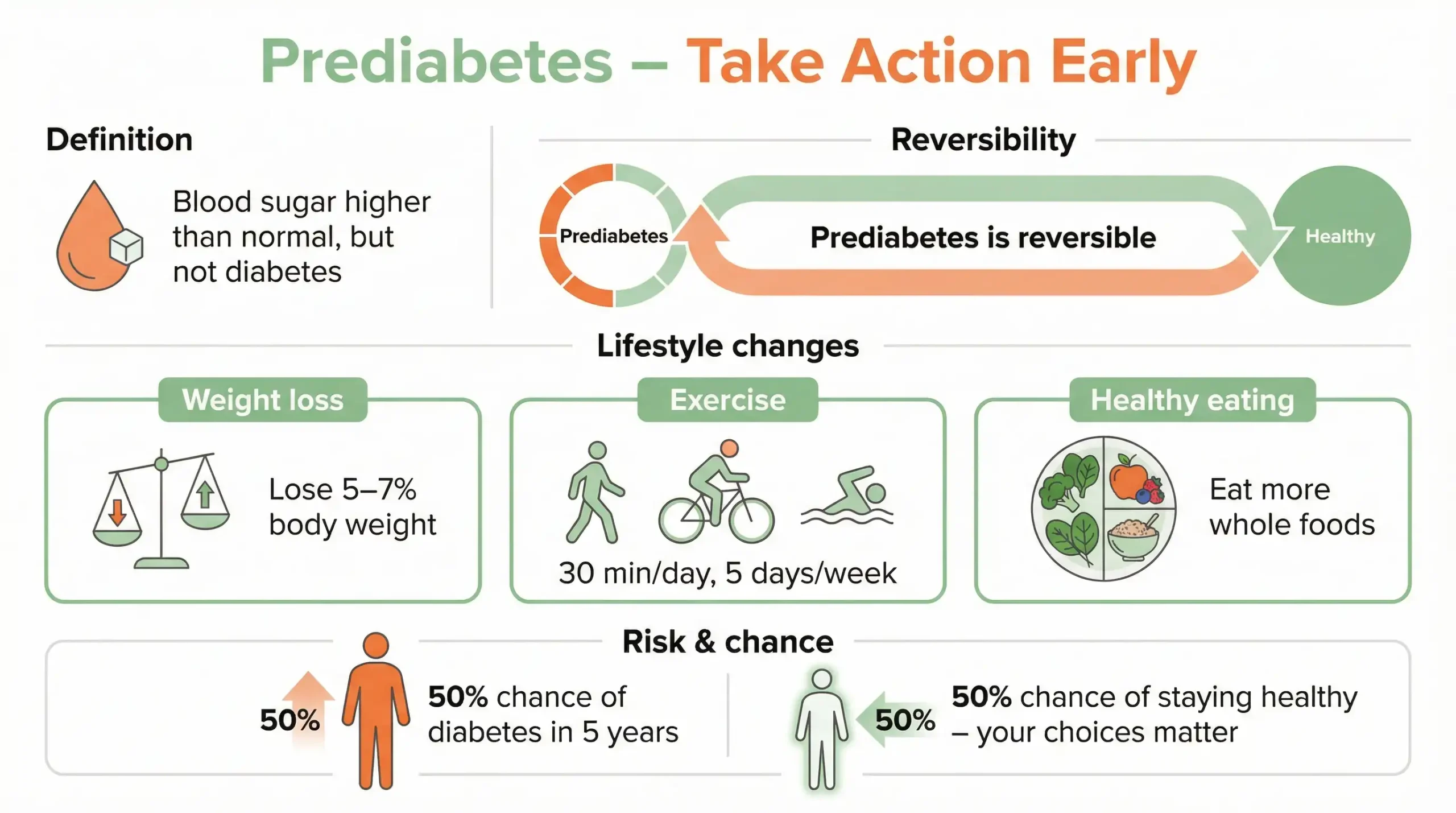
Prediabetes means your blood sugar is higher than normal, but not high enough to be called diabetes.
Here’s the good news: prediabetes is reversible. Studies show that if you make changes now, you can stop it from turning into diabetes.
What works:
- Lose 5 to 7 percent of your body weight: Even a small amount helps.
- Exercise 30 minutes a day, 5 days a week: Walk, bike, swim, or do whatever you enjoy.
- Eat more whole foods: Vegetables, fruits, whole grains, and lean proteins.
If you have prediabetes, you have a 50 percent chance of getting diabetes in the next 5 years. But that also means you have a 50 percent chance of NOT getting it. Your choices matter.
Living With Diabetes in Your Family
If someone in your family has diabetes, it affects everyone. But it doesn’t have to be scary.
You can help by:
- Eating healthy meals together: Make it a family thing, not just for the person with diabetes.
- Being active together: Go for walks, play sports, or just move around.
- Supporting each other: Diabetes can be hard. A little support goes a long way.
I know a family where the dad got diabetes. Instead of just treating him, the whole family changed. They started cooking healthier meals and going for evening walks together. Not only did the dad’s health improve, but everyone felt better. The kids grew up with good habits.
Ready to take control of your health? Whether you’re dealing with diabetes, prediabetes, or just want to live a healthier life, professional guidance makes all the difference. <a href=”https://justlivewell.com/services/” target=”_blank”>Explore our wellness services</a> and start your journey to better health today.
Conclusion
So, is diabetes genetic? Yes, but it’s not the whole story.
Your genes can raise your risk, especially for Type 2 diabetes. If your parents or siblings have diabetes, you’re more likely to get it too. But genes don’t decide your future.
What you eat, how you move, and how you take care of yourself all matter just as much. Even people with a strong family history can prevent diabetes by making smart choices.
If diabetes runs in your family, don’t panic. Get tested. Talk to your doctor. Make small changes in your life. You have more control than you think.
Remember, genes load the gun, but lifestyle pulls the trigger. You get to choose.
Frequently Asked Questions
Can you prevent Type 1 diabetes if it runs in your family?
Right now, there’s no proven way to prevent Type 1 diabetes. Scientists are working on it, but we’re not there yet. If Type 1 runs in your family, your doctor can test you for certain antibodies that show early risk. But lifestyle changes don’t prevent Type 1 like they do for Type 2.
Is Type 2 diabetes always genetic?
No. Many people with Type 2 diabetes don’t have a family history. You can get it from lifestyle factors alone, like being overweight, eating poorly, and not exercising. But if diabetes runs in your family, your risk is higher.
If both my parents have diabetes, will I definitely get it?
No. Even if both parents have Type 2 diabetes, your risk is about 50 to 70 percent. That means there’s still a good chance you won’t get it, especially if you live a healthy lifestyle. For Type 1, the risk is lower, around 1 in 4.
Can losing weight really prevent diabetes?
Yes! Studies show that losing just 5 to 10 pounds can lower your risk a lot. Even if you don’t reach your “ideal” weight, any weight loss helps. Combine it with exercise, and you’re doing even better.
At what age should I get tested for diabetes?
Everyone 35 and older should get tested, even without symptoms. If you have risk factors (like a family history, being overweight, or high blood pressure), get tested earlier. Talk to your doctor about when to start.
