

Audio version of this post
Have you ever felt like doctors only treat your symptoms but never ask why you got sick? That’s where functional medicine comes in.
What Is Functional Medicine?
Functional medicine is a way doctors find and fix the real reasons you’re not feeling well. Think of it like this: if your car keeps breaking down, you don’t just keep fixing the same part. You check everything to see what’s causing the problem.
Regular doctors often give you medicine to stop pain or reduce a fever. They help with symptoms. But functional medicine doctors dig deeper. They want to know what made you sick in the first place.
How It Started and Grew
Back in 1991, a small group of doctors met in Canada. They wanted to change how medicine works. They started asking, “Why do people get sick?” instead of just “What medicine should we give?”
They created something called The Institute for Functional Medicine, which trains doctors in a new, patient-centered approach to healthcare. They were also the first major hospital system to launch a functional medicine program in 2014 at the Cleveland Clinic.
Today, more hospitals and doctors use this method. It’s growing because people want doctors who listen and spend time understanding their health.
Why People Choose It Today
Many people try regular medicine first. When that doesn’t work, they look for other options.
I remember talking to my neighbor last year. She had stomach problems for months. Her doctor gave her pills, but nothing helped. Then she saw a functional medicine practitioner. They asked about her food, stress, and sleep. Within weeks, she felt better by changing her diet and managing stress.
People choose functional medicine because:
- Doctors spend more time with them
- Treatment feels personal
- They learn about their own body
- Focus is on staying healthy, not just treating sickness
How Does Functional Medicine Work?
The main idea is simple: your body is one big connected system. When one part isn’t working right, it affects everything else.

The Root Cause Approach
Let’s say you feel tired all the time. A regular doctor might say you need more sleep. But a functional medicine doctor asks more questions.
They want to know:
- What do you eat every day?
- How much stress do you have?
- Do you have pain anywhere?
- How’s your digestion?
- What’s your family health history?
They might find that you’re tired because your gut isn’t healthy. Or maybe you’re not getting enough vitamins. Or stress is keeping you awake at night.
By finding the root cause, they can help you get better for good. Not just for a few weeks.
Your Body as a Whole System
Your body parts all talk to each other. Your gut affects your brain. Your stress affects your heart. Your sleep affects your immune system.
Functional medicine looks at all these connections. They check how everything works together.
A study published by the Institute for Functional Medicine in 2021 showed that patients who got this type of care felt healthier overall. Their quality of life improved because doctors treated them as a whole person, not just one problem.
Who Can Practice Functional Medicine?
Not everyone who says they do functional medicine has the same training. You need to know the difference.
Medical Doctors vs. Other Practitioners
- Medical doctors (MDs) go to medical school for years. They do training in hospitals. They can give you medicine and do tests. Some MDs learn about functional medicine after they finish regular training.
- Doctors of Osteopathic Medicine (DOs) are similar to MDs. They also go to medical school and can prescribe medicine. Many DOs practice functional medicine too.
But here’s the thing: some people call themselves functional medicine practitioners without being real doctors. They might be chiropractors or health coaches. These people haven’t been to medical school.
This doesn’t mean they’re all bad. But you need to be careful. Some don’t have proper training and might suggest things that aren’t safe.
Training and Certifications
Real functional medicine doctors get extra training. They might take courses from places like The Institute for Functional Medicine.
According to WebMD, the American Academy of Family Physicians (AAFP) reviews and accredits certain continuing medical education courses to ensure the training meets established quality standards.
When you look for a functional medicine doctor, always check:
- Do they have MD or DO after their name?
- Are they licensed in your state?
- Did they go to a real medical school?
- What extra training do they have?
What Makes Functional Medicine Different from Regular Medicine?
The biggest difference is how doctors spend their time with you.
Time Spent with Patients
Regular doctor visits are short. Maybe 15 minutes. You talk about one problem. The doctor gives you medicine. You leave.
Functional medicine visits are longer. Your first visit might be 60 to 80 minutes. The doctor asks many questions. They want to understand your whole life.
They ask about:
- What you eat
- How you sleep
- Your job and stress
- Your relationships
- When you felt good
- When problems started
One patient told me her functional medicine doctor spent an hour just talking. No rushing. No quick answers. She felt heard for the first time in years.
Treatment Methods Used
Regular doctors often start with medicine. Functional medicine doctors start with lifestyle changes.
They focus on:
- Better food choices
- More movement and exercise
- Better sleep habits
- Ways to reduce stress
- Removing toxins from your life
They call food “medicine.” What you eat can heal you or make you sicker.
But they also use regular medicine when you need it. If you have a serious problem, they can prescribe pills or send you for surgery. They don’t reject modern medicine. They just add more tools to help you.
According to research from the Cleveland Clinic, this approach helps people feel better over time and can even save money on healthcare costs.
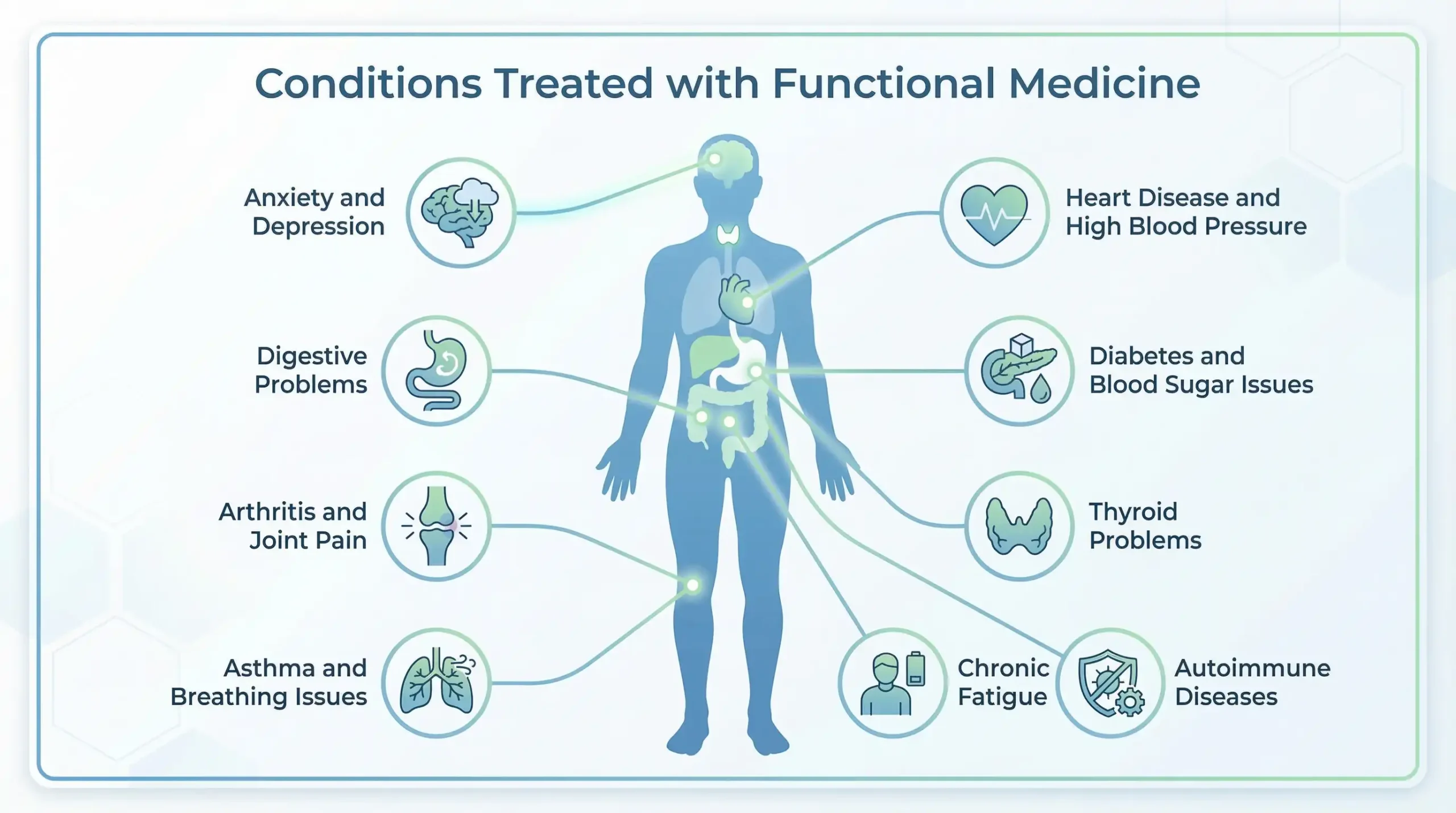
Conditions Treated with Functional Medicine
Functional medicine works well for many health problems, especially ones that last a long time.
Common Chronic Health Problems
These doctors help people with:
- Diabetes and blood sugar problems
- Heart disease and high blood pressure
- Gut problems like bloating or pain
- Autoimmune diseases which your body attacks itself
- Thyroid problems
- Arthritis and joint pain
- Chronic fatigue
- Anxiety and depression
- Asthma and breathing issues
My cousin had arthritis in her hands. She could barely open jars. Her regular doctor said there was no cure, just pain pills. But a functional medicine doctor helped her change her diet and reduce inflammation. After six months, she had much less pain.
The key is that these problems often have many causes. Fixing just one thing doesn’t work. You need to fix multiple things at once.
Prevention and Wellness Goals
You don’t have to be sick to see a functional medicine doctor. Many people go to stay healthy.
They want to:
- Prevent disease before it starts
- Have more energy
- Sleep better
- Think clearer
- Age better
- Feel their best
Think of it like taking your car for regular check-ups. You don’t wait until it breaks down. You keep it running well.
What Happens at a Functional Medicine Appointment?
If you’ve never been to this type of doctor, you might wonder what to expect.
Your First Visit
Before you even go, they might send you forms to fill out. These ask about your health history, your family’s health, what you eat, and how you live.
When you arrive, you sit down with the doctor for a long conversation. They really listen. They take notes. They want to understand your story.
Doctors might ask about:
- Important events in your life
- Times you’ve been sick
- What makes you feel worse
- What makes you feel better
- Your goals for your health
They might also do a physical exam. They could order blood tests or other tests to see what’s happening inside your body.
The doctor doesn’t rush. You’re not just a number. You’re a person with a unique body and life.
Creating Your Personal Plan
After the first visit, the doctor makes a plan just for you. No two plans are the same.
Your plan might include:
- Eating more vegetables and less sugar
- Taking certain vitamins or supplements
- Sleeping 8 hours each night
- Walking 30 minutes daily
- Managing stress with deep breathing
The doctor explains why each step helps you. They work with you, not just tell you what to do.
You come back for follow-up visits. The doctor checks how you’re doing. If something isn’t working, they change the plan.
It’s like having a partner who helps you get healthy. You’re not alone in this.
Benefits of Choosing Functional Medicine
People who try this approach often say it changed their life.
Personalized Care for You
Every person is different. What works for me might not work for you.
Functional medicine understands this. Your doctor looks at your genes, your life, your environment, and your choices. They create a plan that fits you.
A study in JAMA Network Open from 2019 found that people who got functional medicine care reported better health outcomes. They felt more satisfied with their treatment.
It’s not a one-size-fits-all solution. It’s made for you.
Focus on Long-Term Health
Regular medicine often focuses on quick fixes. Take this pill. Feel better now.
But functional medicine thinks about your future. They want you to feel good today and stay healthy for years.
By fixing the root causes of your problems, you don’t just cover up symptoms. You actually get better. And you learn how to stay better.
One woman told me she used to get sick every winter. After working with a functional medicine doctor, she changed her diet and stress habits. Now she rarely gets sick at all. She didn’t just treat colds. She made her whole immune system stronger.
Is Functional Medicine Right for You?
This approach isn’t for everyone. But it might be perfect for you.
Signs You Might Benefit
You should think about functional medicine if:
- Regular doctors haven’t helped with your problem
- You have multiple health issues
- You’re tired of just taking pills
- You want to understand why you’re sick
- You’re willing to make lifestyle changes
- You want to prevent future problems
It works best when you’re ready to be an active part of your healing. You can’t just sit back. You have to try new things and stick with the plan.
Things to Think About
Be honest with yourself. Functional medicine takes time and effort.
Some things to know:
- Visits are longer but less frequent
- Insurance might not cover everything
- You’ll need to make lifestyle changes
- Results take time, not overnight
- You might need to try different approaches
Also, make sure your functional medicine doctor is really qualified. Check their credentials. Make sure they’re a real MD or DO.
According to WebMD, some people who call themselves functional medicine practitioners don’t have proper medical training. This can be dangerous.
Do your research. Ask questions. Make sure you’re in good hands.
How to Find a Functional Medicine Doctor
Finding the right doctor takes some work, but it’s worth it.
Start with The Institute for Functional Medicine’s website. They have a search tool. You put in your ZIP code, and it shows doctors near you.

Look for doctors with good reviews. Read what other patients say. See if the doctor sounds like a good fit for you.
Questions to Ask Before You Choose
When you talk to a potential doctor, ask:
- Are you an MD or DO?
- Where did you go to medical school?
- What functional medicine training do you have?
- How long have you been practicing?
- What conditions do you treat most?
- How much time do you spend with patients?
- What does your treatment approach include?
- How much do visits cost?
- Does my insurance cover this?
Don’t be shy about asking these questions. A good doctor will be happy to answer. If they get defensive or vague, that’s a red flag.
Trust your gut. If something feels off, keep looking. You want a doctor you feel comfortable with. At JustLive Well, we’re here to help. Contact us today to schedule your consultation
Conclusion
Functional medicine offers a different way to think about health. Instead of just treating symptoms, it finds and fixes the real problems making you sick.
It’s not magic. It takes time, effort, and commitment. But for many people, it’s the answer they’ve been searching for.
If you’re tired of feeling bad and want to understand your body better, functional medicine might be worth trying. Find a qualified doctor, ask good questions, and see if this approach feels right for you.
Your health is important. You deserve care that treats you as a whole person, not just a list of symptoms.
Get in Touch with Us
At JustLive Well, we’re here to guide you on your health journey. Schedule your appointment today and take the first step toward better wellness!
Frequently Asked Questions
How much does functional medicine cost?
Costs vary a lot. First visits usually cost between $500 and $1,200. Follow-up visits cost less, maybe $150 to $400. Some insurance plans cover visits if the doctor is an MD or DO. Always check with your insurance first. Many doctors offer payment plans, too.
Does insurance cover functional medicine?
Some insurance plans cover functional medicine visits with licensed MDs or DOs. But many plans don’t cover extra services like detailed testing or supplements. According to Aurora Health Care, office visits are often covered with your regular copay. But you might pay out of pocket for special tests or treatments.
Is functional medicine scientifically proven?
Some parts are backed by science, others aren’t. Research shows that diet, exercise, and stress management improve health. Studies have found that patients report better health with this care. But not all functional medicine practices have strong research behind them. That’s why finding a doctor who uses evidence-based methods is important.
How long does treatment take?
It depends on your condition. Some people feel better in weeks. Others need months or even a year. Chronic problems that took years to develop take time to fix. Your doctor will give you a timeline based on your situation. The focus is on lasting results, not quick fixes.
Can I keep my regular doctor?
Yes! Functional medicine doctors often work with your regular doctor. They don’t replace them. They add another layer of care. Your regular doctor handles emergencies and serious conditions. Your functional medicine doctor focuses on the bigger picture and prevention.
